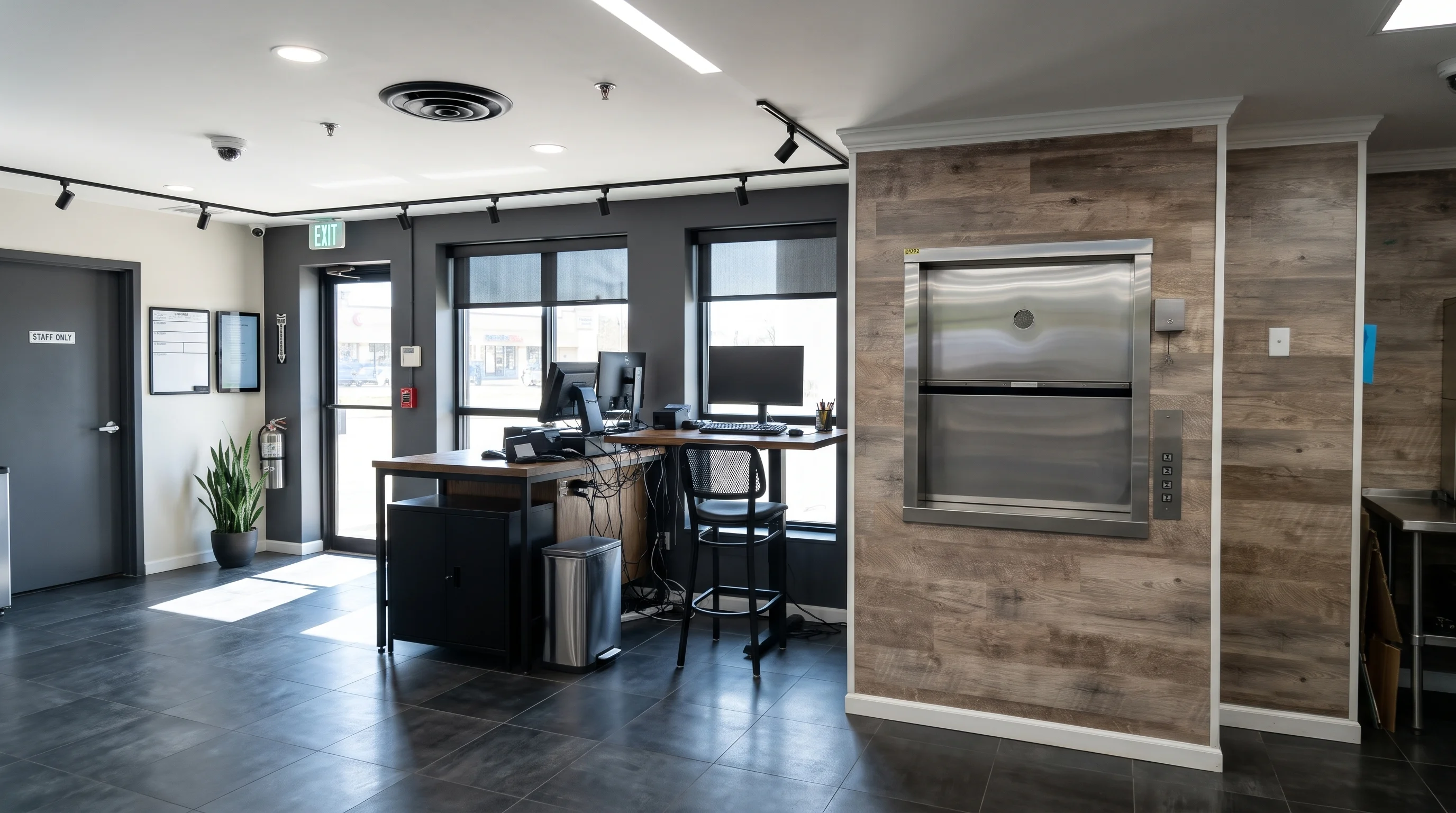
Commercial Dumbwaiters in Oregon
Goods lifts for restaurants, care homes, shops and offices. Up to 500 lb, nine stops and 75 feet of travel, built for equipment that runs all day.
Four generations. Every lift we install, we service for life.
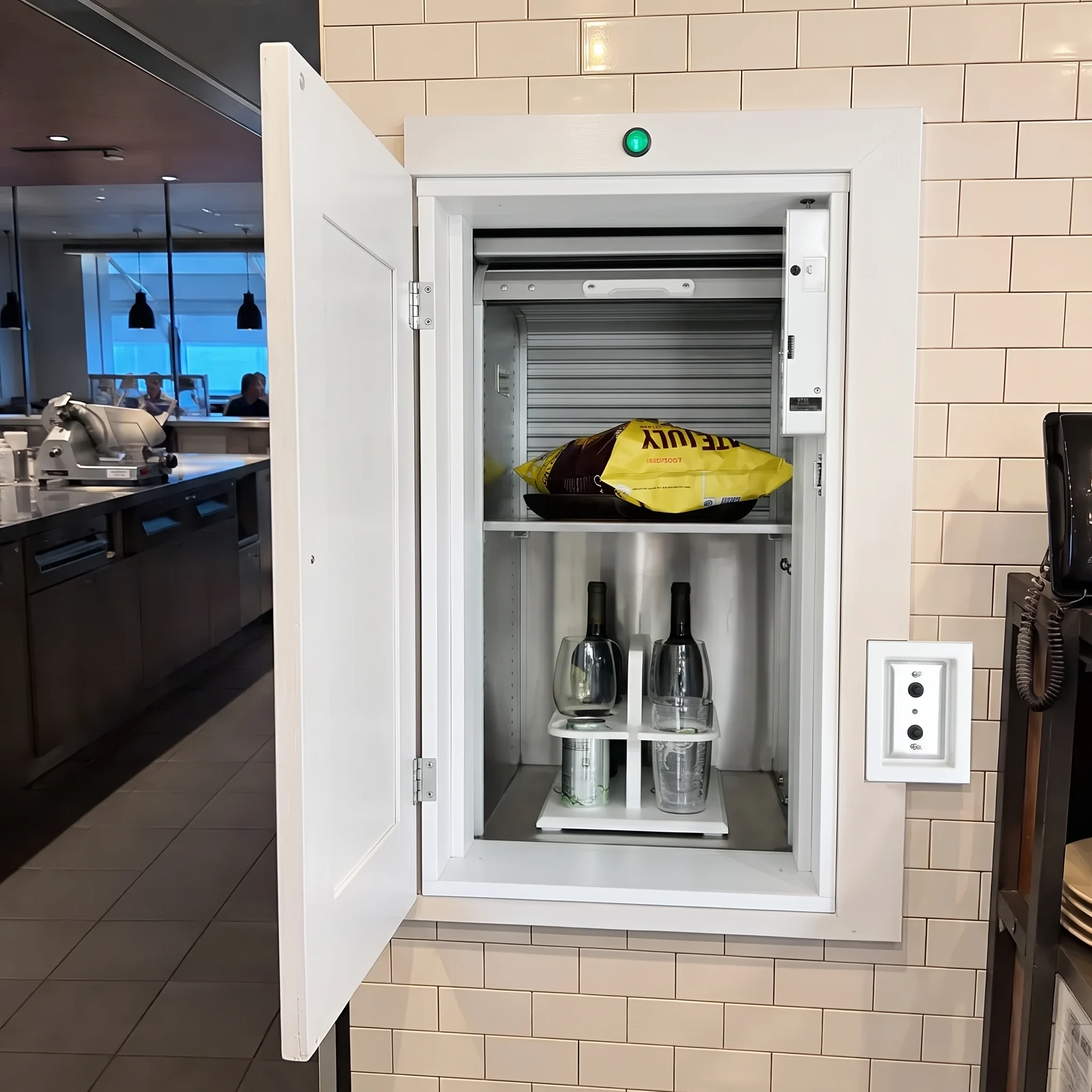
Staff Should Not Be Carrying Loads Up Stairs
In any building where goods move between floors, someone is carrying them. Trays of food, cases of stock, linen, files, waste. Every trip is slow, and every trip is on a staircase with both hands full.
The injury exposure is the part worth thinking about.Manual handling and stairs is the combination behind a significant share of workplace injuries, and in a restaurant it happens dozens of times a shift, often at speed, often carrying something hot.
A dumbwaiter takes those trips off the staircase entirely. The load goes up on its own at 50 feet per minute while your staff use the stairs empty-handed, or do not use them at all.
And it is faster. In a kitchen with a dining floor above, service speed is limited by how quickly food gets upstairs. That is a throughput problem, not just a safety one.
Buildings That Use Commercial Dumbwaiters
Restaurants and bars
The most common application by some margin. Food from a basement or ground floor kitchen to a dining floor, plates and glassware back down. Counter height loading and stainless steel finishes are standard here.
Care homes and assisted living
Meal trays, linen and supplies between floors, in buildings where staff time is stretched and manual handling policy matters.
Shops and retail
Stock between a stockroom and a sales floor, without tying up a passenger lift or a staircase.
Hotels
Linen, room service, housekeeping supplies.
Offices and libraries
Files, archive boxes, print stock, catering.
Any building with a basement
Deliveries land at street level and need to go down, or stock lives below and needs to come up.
Commercial Dumbwaiter Capacities
We install the Inteli-Lift from Elevation Innovation, American-built with German Bauer drive motors rated for over 60,000 trips a year.
| Capacities | 75, 125, 250, 300 or 500 lb |
| Car size | 30 x 30 x 40 in up to 36 x 36 x 48 in |
| Custom sizes | Available |
| Volume | Up to 36 cubic feet |
| Travel | Up to 75 ft |
| Stops | Up to 9 |
| Speed | 50 ft/min |
| Material | Powder coated steel or stainless steel |
| Warranty | 3 years parts, extended available |
Choosing capacity
Restaurants generally want 250 lb or more. The higher-capacity 300 and 500 lb units are for buildings moving stock, cases and bulk supplies rather than trays.
Duty cycle matters more than capacity
A dumbwaiter in a restaurant makes hundreds of trips a week for years. The motors in this range are specified for over 60,000 trips annually, which is what separates equipment that lasts a decade from equipment that needs replacing in three years. It is the specification worth asking any supplier about.
Loading, Access and Finishes
Counter height loading
The car opens at worktop level so nothing is lifted from the floor. Standard in kitchens and the right choice anywhere the unit is loaded repeatedly through a shift.
Floor loading
The car opens at floor level, which suits heavy cases, trolleyed loads and stock.
One side or two
Two-sided access lets you load in a kitchen and unload in a servery on the opposite side of the shaft, which matters in a tight floor plan.
Stainless steel
Standard specification in food service, for hygiene and for cleaning.
Automatic operation
The car can be sent or called from any floor, stops automatically at each landing, and the controller displays current status. Arrival buzzers and in-use lights on each keypad.
Shelving
Removable adjustable shelves for buildings moving multiple smaller items rather than single loads.
Safety, Interlocks and Certification
Door interlocks at every landing
The dumbwaiter will not operate unless all hoistway doors are closed, and no door can be opened unless the car is at that landing. This is the primary safety feature and the reason an open shaft is not possible.
Slack cable detection and Type A safety brake
If a cable goes slack the system detects it and the safety brake arrests the car.
Final limit switches
Top and bottom limits prevent overtravel.
Component-level certification
The equipment is independently certified to exceed ASME A17.1 down to individual components, not just the assembly. In a commercial building subject to inspection, that documentation matters.
Goods only.
Dumbwaiters are not passenger equipment. Every serious dumbwaiter incident involves someone getting into one. In a workplace that is a staff briefing point, not an assumption.
Why Oregon Businesses Call Us
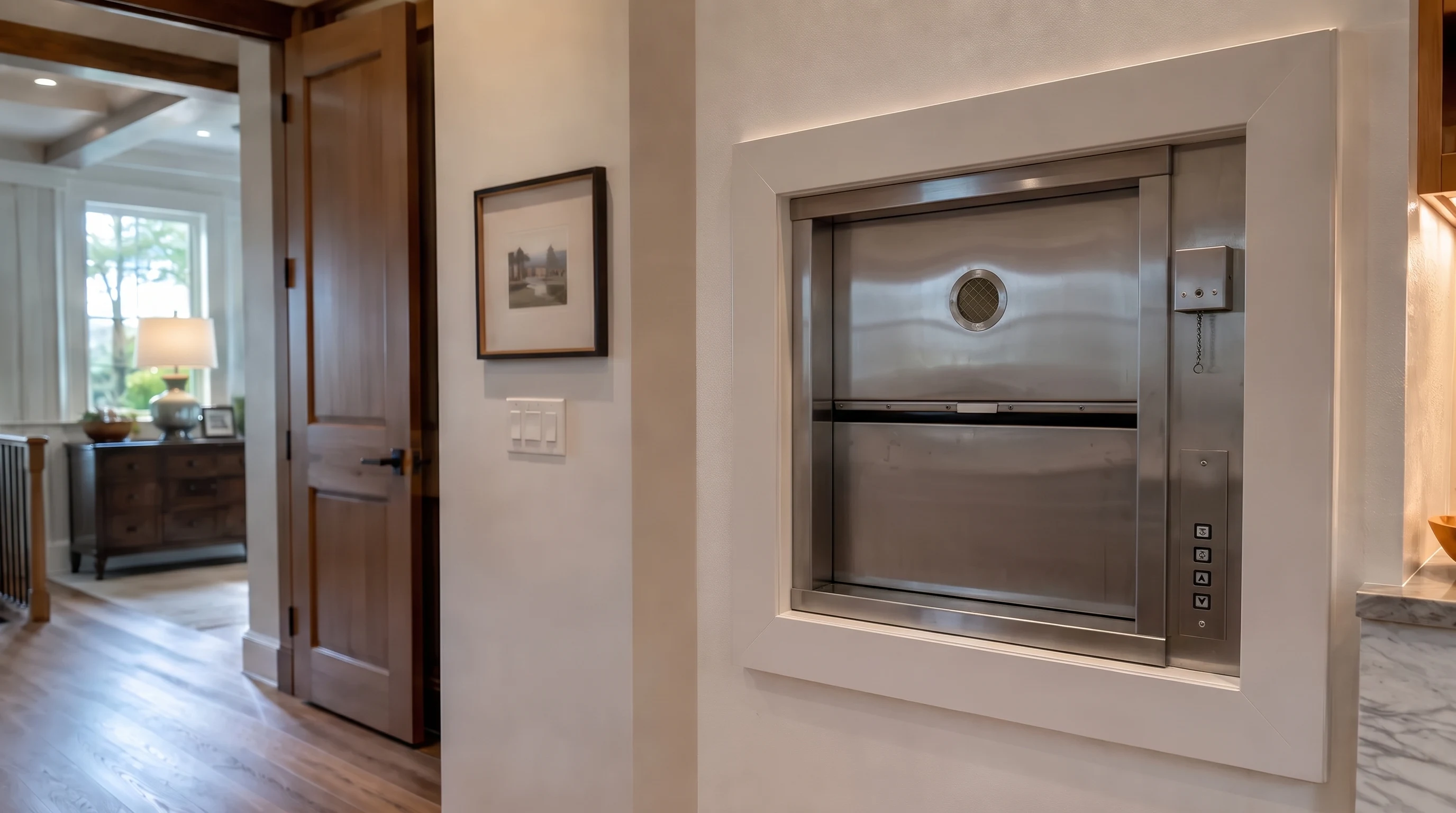
We coordinate the shaft before the equipment arrives
The most expensive mistake on a dumbwaiter job is a hoistway built to the wrong dimensions. We supply the drawings up front and work with your contractor, so the equipment fits when it lands.
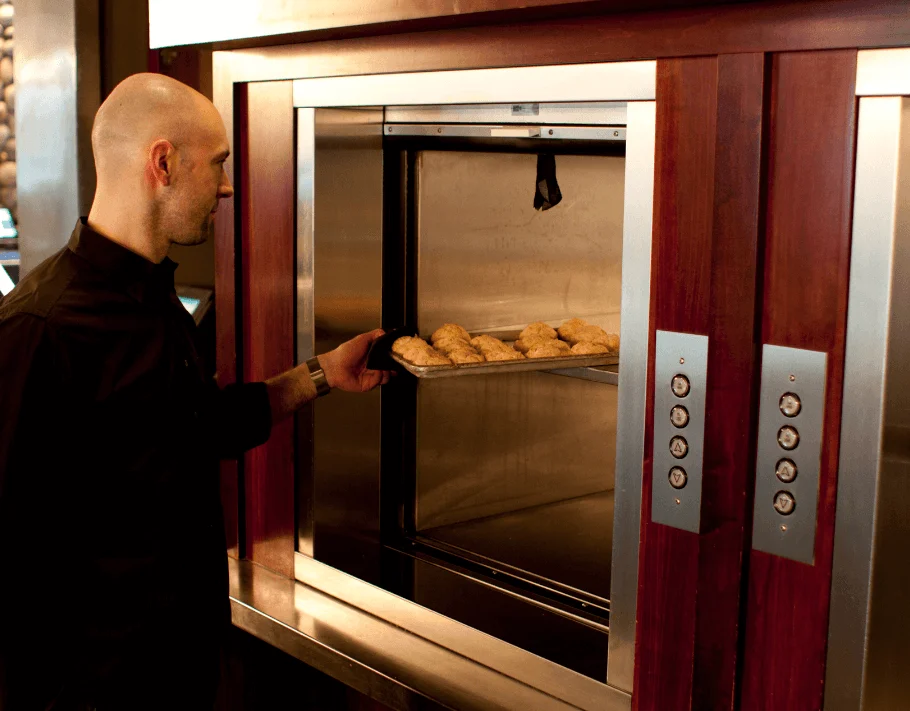
We work around your trading hours
Fitting a dumbwaiter into a working restaurant or care home means planning around service. We schedule to suit the building rather than the other way round.
We service it for the life of the building
Commercial dumbwaiters run hard and get forgotten until they stop. We maintain what we install and service other brands, including units whose manufacturers no longer exist.
We are an elevator company
Not a kitchen equipment supplier. The same technicians who work on elevators across Oregon look after your dumbwaiter, and they are licensed to.
Commercial Dumbwaiters Across Oregon




Commercial Dumbwaiter Questions
A commercial dumbwaiter is a goods lift that carries loads between floors of a building. Cars run in a dedicated shaft with interlocked doors at each landing, and can be sent or called automatically from any floor. They carry goods, not people.
Ready to talk about moving goods?
Tell us what the building is, what needs moving and between which floors. We will tell you what capacity it needs and what fitting it involves. Four generations of Oregon elevators behind every answer.