LU/LA Elevators in OregonWhat They Are and What Fits Better
If you’re an architect or building owner considering a LU/LA elevator, it’s important to know they have real limitations in Oregon. We explain how they work, where they do and don’t fit, and help you choose the right accessibility solution, often a wheelchair lift at a fraction of the cost.
What Is a LU/LA Elevator?
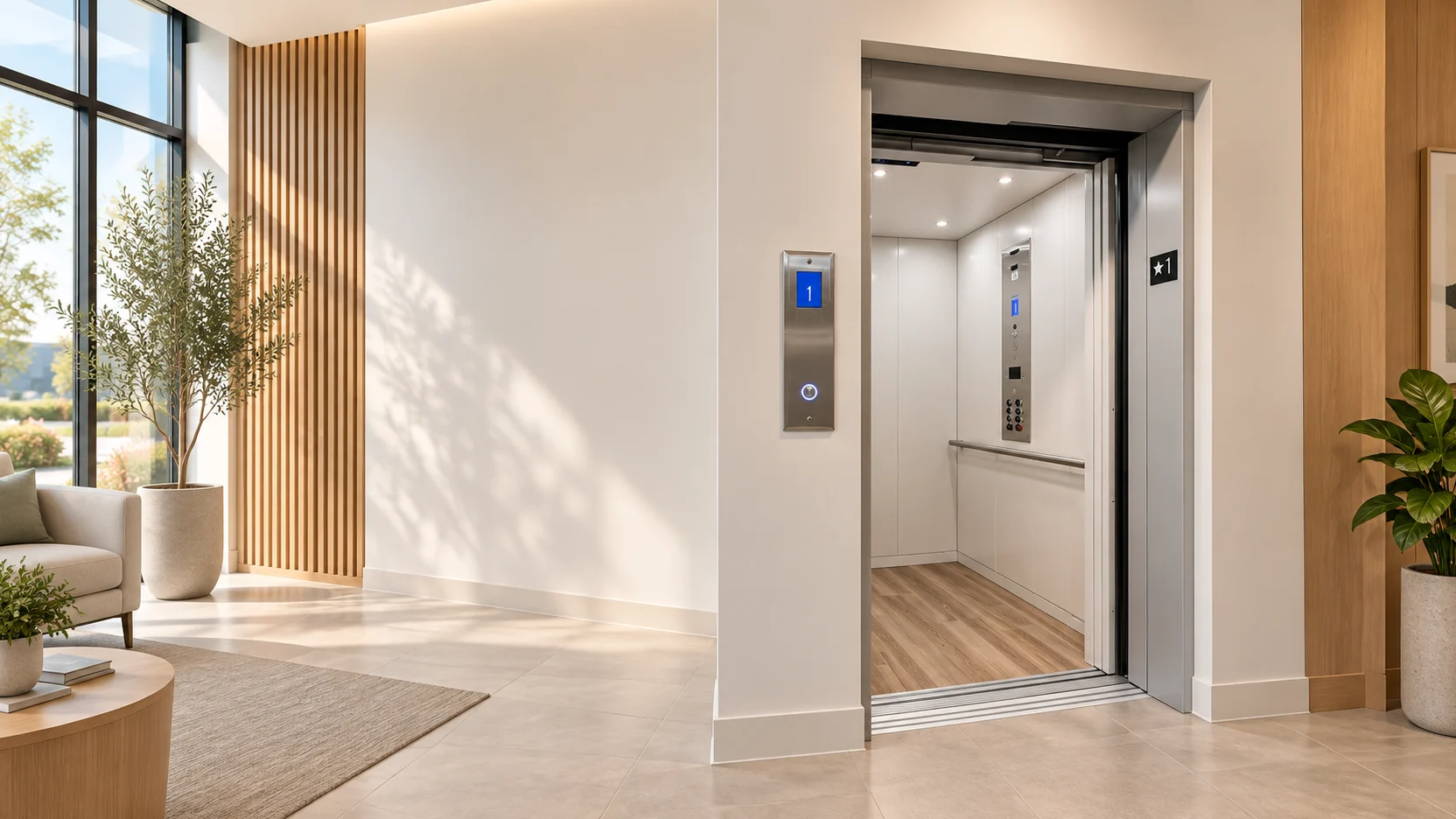
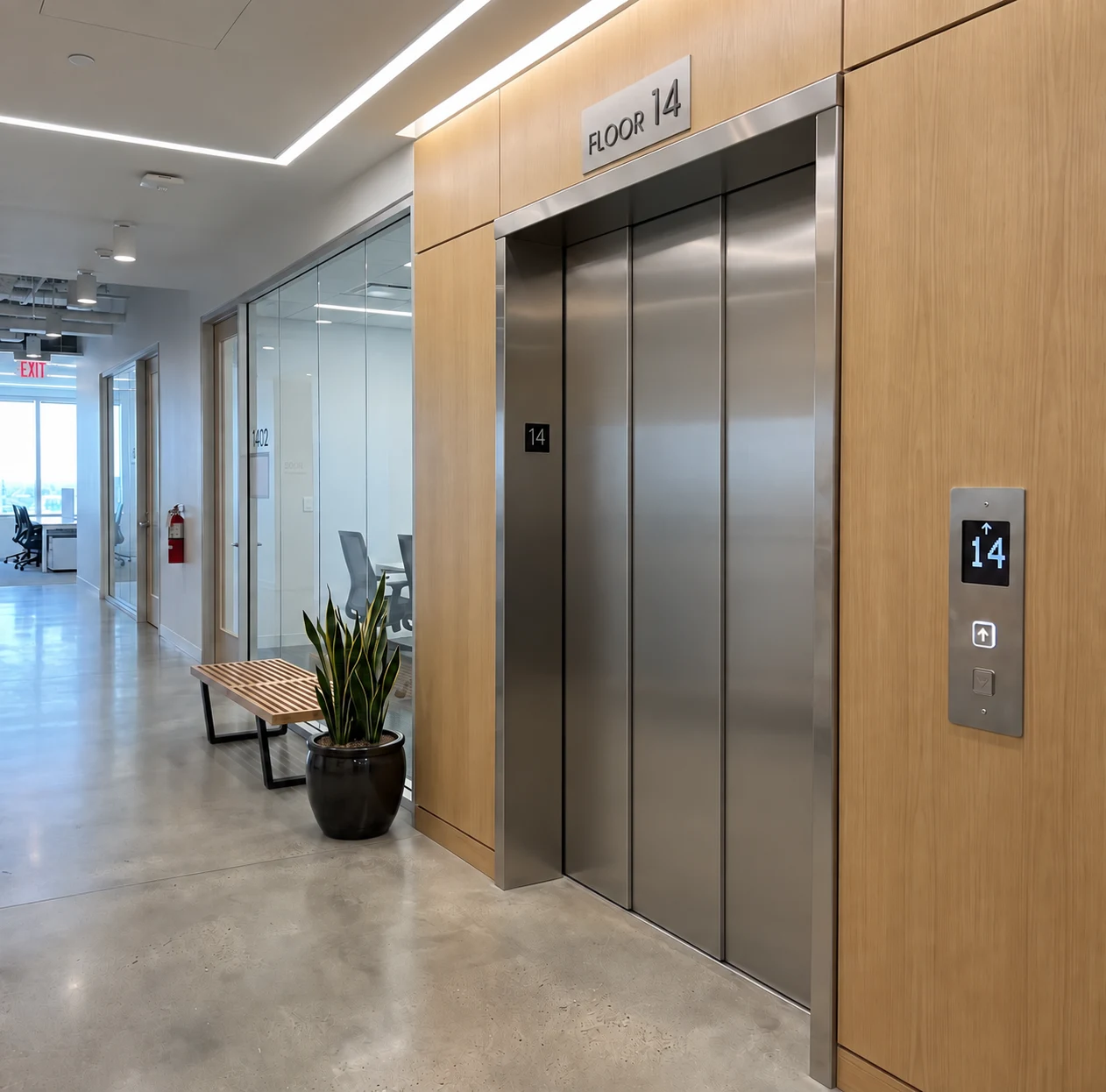
LU/LA stands for Limited Use, Limited Application. It is a proper passenger elevator, fully enclosed with automatic sliding doors and call buttons, but with its size, capacity, speed and rise limited by code so it can be built into buildings that could not take a full-size elevator.
The limits are set out in ASME A17.1 Section 5.2 and work alongside ADA accessibility requirements. In exchange for accepting them, you get a much smaller hoistway, a shallower pit, less overhead clearance and a lower cost than a full commercial elevator.
What it sits between
A wheelchair lift solves a change of level but carries less and operates on constant-pressure controls. A full commercial elevator does everything but needs a deep pit, significant overhead and often three-phase power. A LU/LA sits between the two: it behaves like a normal elevator, and it fits where a normal elevator does not. On paper it is a neat middle option, which is why architects reach for it at the design stage.
LU/LA Elevators in Oregon
Here is the part worth knowing before you design around one. In Oregon, LU/LA elevators are not a straightforward install. The state is restrictive on them, approvals are limited, and in practice they tend to be viable only in narrow cases such as certain churches.
Because of that, we do not install LU/LA elevators as a general product, and we would rather tell you plainly than take you down a path that stalls at approval.
If a LU/LA is genuinely permittable and the right answer for your specific building, we will say so and help you work through it. Far more often there is a better-fit option that gets you the same accessibility, faster, cheaper, and with a cleaner approval.
How a LU/LA Elevator Works: The Code Limits
These limits are what define a LU/LA. They are fixed by code, not by any one manufacturer.
What that means in practice: Twenty-five feet covers two, three and sometimes four stops in a low-rise building. The 1,400 lb capacity carries a wheelchair user with an attendant, or a few people. Thirty feet per minute is slower than a full elevator, which suits a building where the elevator is used occasionally rather than constantly. Additional travel is sometimes allowed with a local variance, which is one of the things that gets complicated in Oregon.
What Most Oregon Buildings Actually Need: A Wheelchair Lift
For the majority of low-rise accessibility projects here, a vertical platform lift does what a LU/LA would have done, for a fraction of the price and with a far simpler path to approval.
Where it fits
Getting between two or three stops, which covers most church, office and public-building layouts.
Daylight-basement buildings, common in Oregon, where you reach a lower level and an upper level from the entry.
Any project where budget and a clean approval matter more than having something that looks like a traditional elevator car.
Why owners choose it over a LU/LA
It offers a much lower cost and a simpler, more reliable approval path here in Oregon.
They are straightforward to install and service, and we service what we install.
If your building genuinely needs the enclosed-cab feel or more reach, we will point you to a home elevator instead. The right answer depends on the building, and working that out with you is the job.

Building Accessibility for a Church?
Churches are where these questions come up most for us. Many Oregon congregations meet in daylight-basement buildings, where the entry sits between a sanctuary up a flight and a fellowship area down a flight. A three-stop platform lift reaches both from the lobby, and it is the option we set up most often for places of worship.
If someone has suggested a LU/LA for your church, talk to us first. There is usually a simpler, cheaper way to get every member to every floor.
A platform lift is usually the right call...
...in Oregon when the requirement is one to three changes of level, the traffic is light, and you want the cleanest approval and the lowest cost. For most Oregon buildings this is where you land, and it is what we install and service.
See wheelchair liftsA LU/LA can suit a building when...
...it is low-rise, travel is within 25 feet, and it is used occasionally rather than constantly. In Oregon, though, the approval is the catch, which is why they stay uncommon here outside specific cases.
A full commercial elevator is right when...
...travel exceeds what a variance allows, the building has heavy or continuous traffic, or you need more capacity or speed.
An honest note on cost
A LU/LA is not always cheaper than a full elevator once everything is counted, and lead times run to months. For most Oregon accessibility projects, a platform lift is both the cheaper and the more practical answer, which is why it is what we usually recommend and fit.
Why Architects and Owners Bring LU/LA Questions to Us
We tell you what actually works in Oregon
We will not point you at a LU/LA that stalls at approval. Four generations of Oregon elevator work means we know what the state permits before you design around it.
We steer you to the right fit, not the biggest sale
Often the right answer is a wheelchair lift that costs far less than a LU/LA. That answer is better for you, so it is the one we give.
We install and service what we recommend
Whatever you land on, the same company that helped you choose it puts it in and keeps it running, including the required testing. No handoff to a company learning your equipment from scratch.
We work statewide
Metro, coast, valley or gorge, we cover the whole state, so your location does not decide your options.
Accessibility Solutions Across Oregon





LU/LA Elevator Questions, Answered
As a general product, no. Oregon is restrictive on LU/LA elevators and approvals are limited, so they stay viable only in narrow cases. For most buildings we point you to an option that actually works here, usually a wheelchair lift.
Ready to Talk Elevators?
Tell us about the building, how many floors it has, and what is stopping people reaching them. We will tell you honestly what Oregon will permit and what fits best, whether that is a wheelchair lift, a home elevator, or in the rare right case, a LU/LA. Four generations of Oregon elevators behind every answer.