Commercial Stair Lifts in Oregon
Simple stair access for churches, offices, clinics and small buildings. Fitted to the staircase you already have, with no shaft and no construction.
Four generations. Every lift we install, we service for life.
The Least Disruptive Way to Solve a Staircase
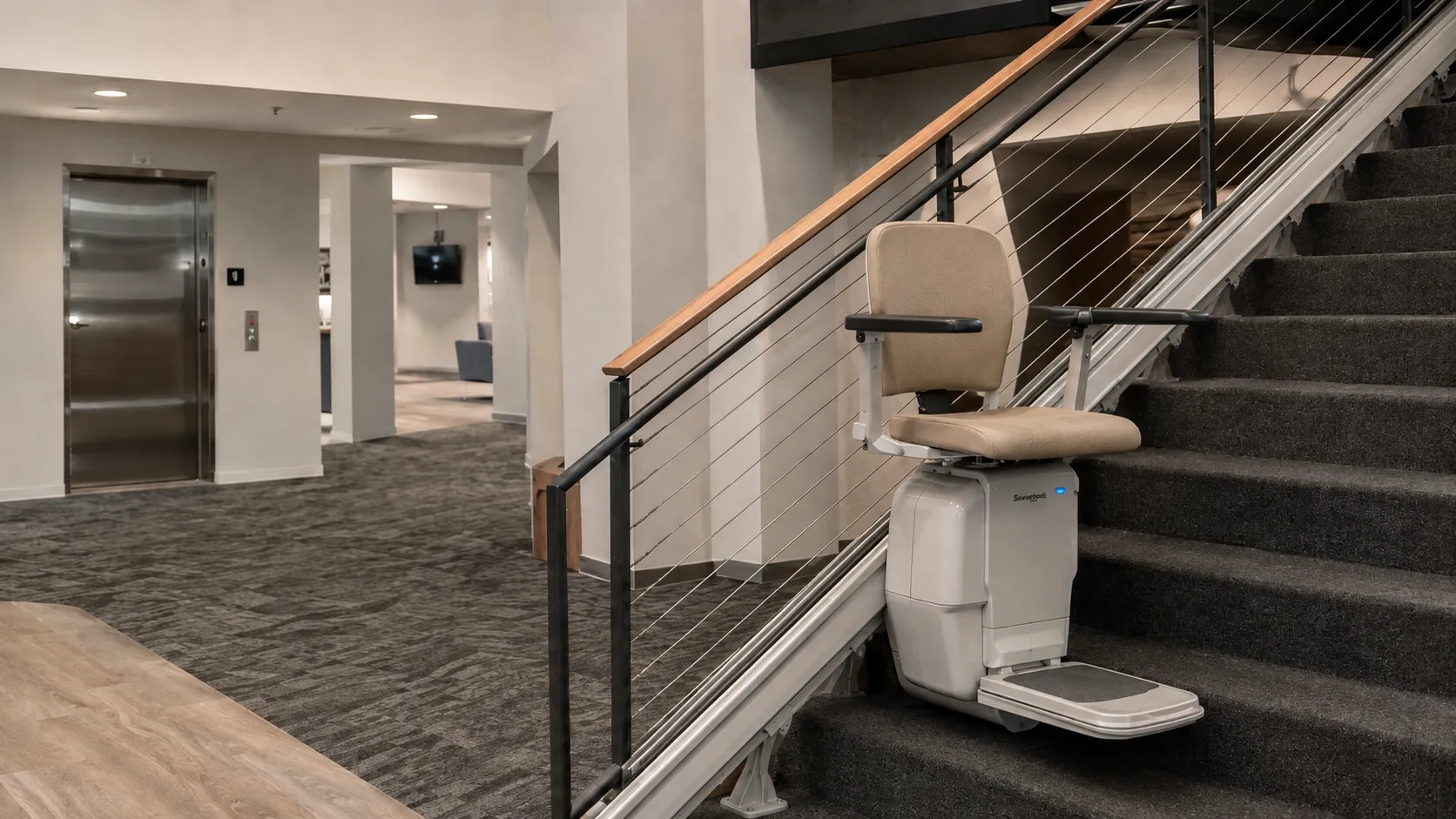
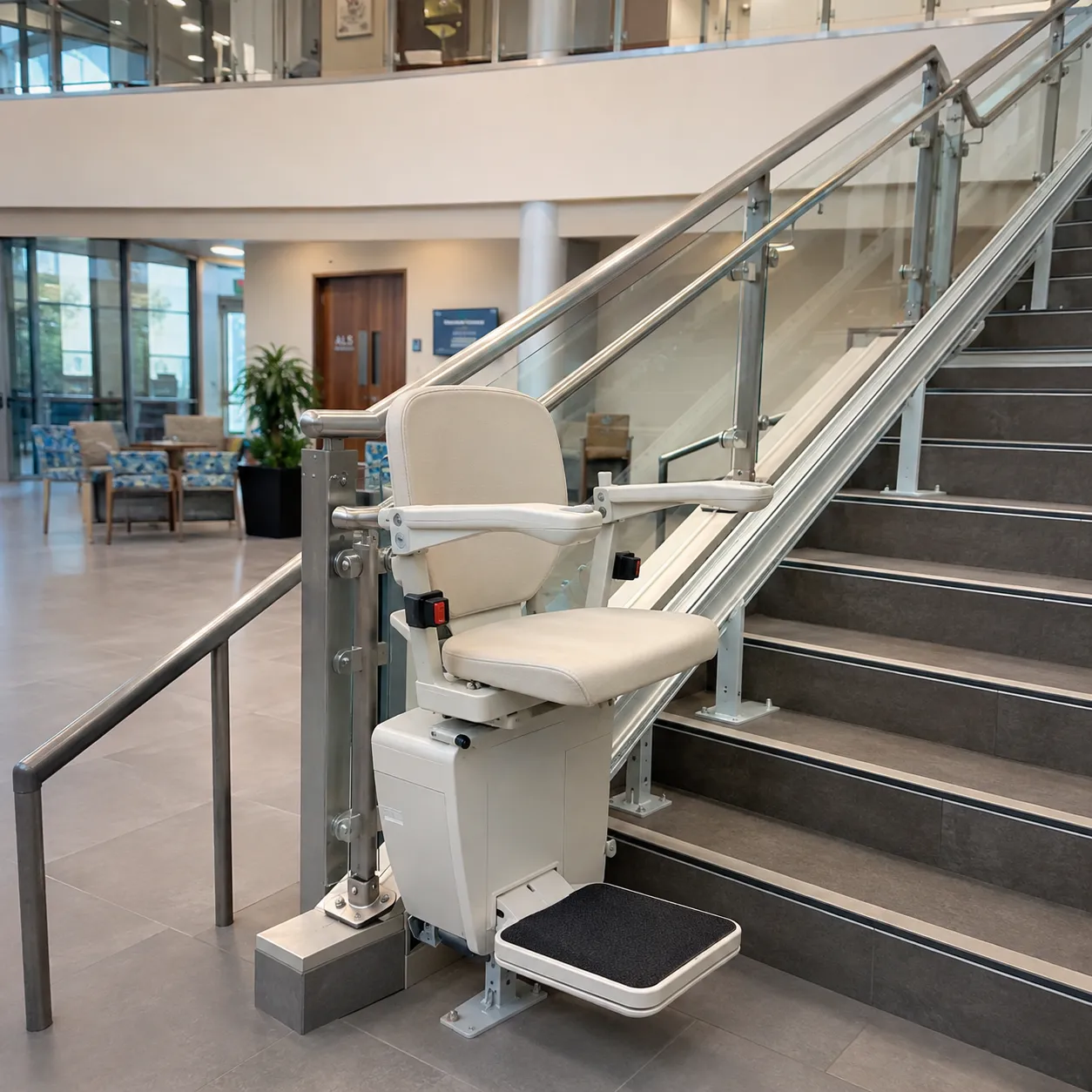
A stair lift is the smallest intervention available for a building with a stair problem. No shaft, no pit, no machine room, no structural work. The rail fixes to the existing staircase and the lift is working the same day on a straight run.
For a small building where a few steps are the only barrier, it is often the sensible answer. A church with three steps to the sanctuary, an office with a mezzanine, a clinic with a raised reception.
Where it stops being the answer
A commercial stair lift carries one seated person at a time, slowly. If the building needs to move wheelchairs, handle real traffic, or provide an accessible route as a legal requirement, a stair lift may not satisfy it. That is a conversation worth having early rather than after installation.
When a Stair Lift Fits a Building
A stair lift usually suits a building where the users can transfer onto a seat, the traffic is light, the staircase is the only obstacle, and there is no practical space for anything larger.
A platform lift usually suits...
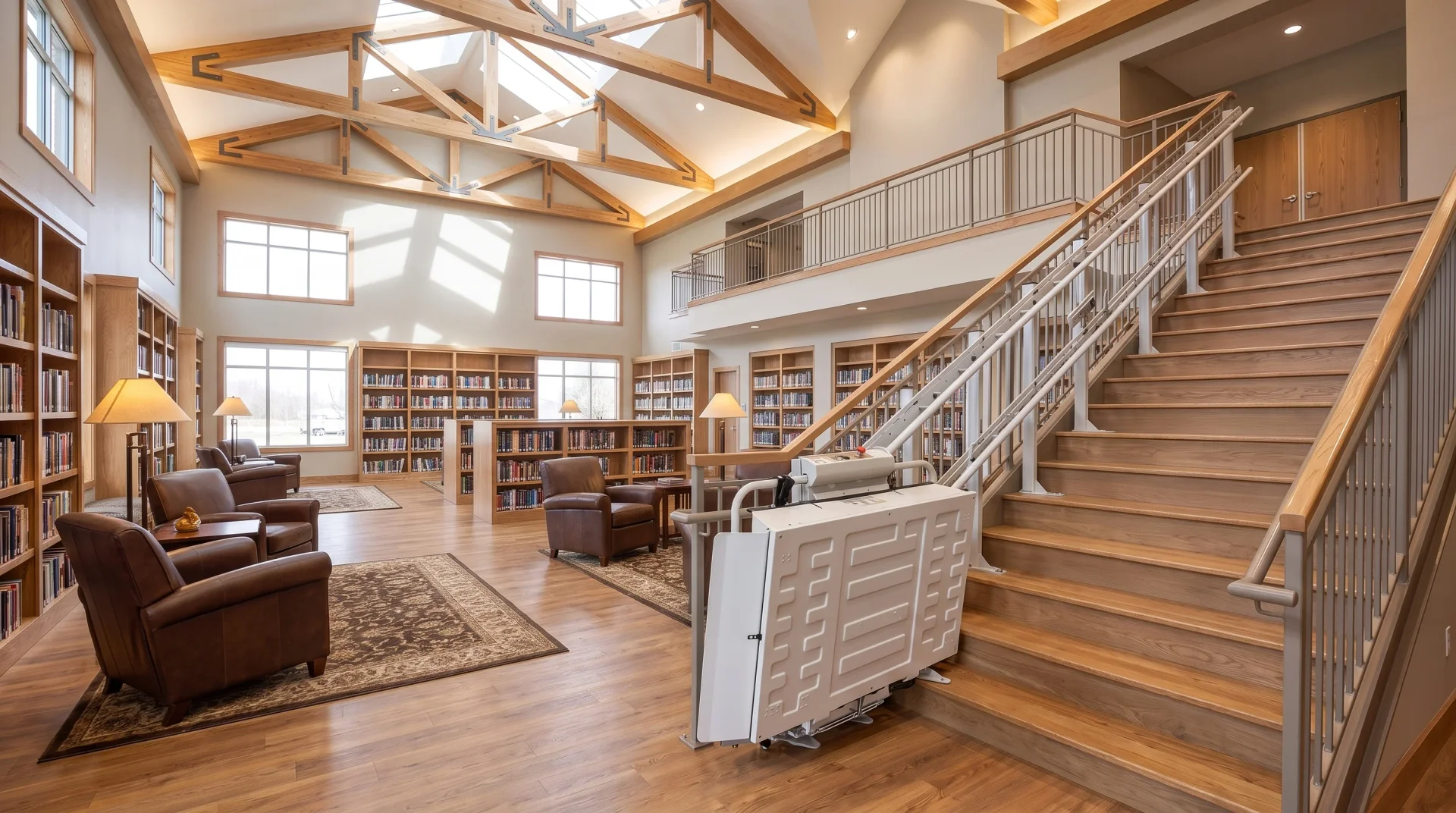
...a building where wheelchairs need to travel, or where an accessible route has to accommodate anyone who arrives.
See wheelchair liftsA LU/LA elevator usually suits...
...a building with several floors, regular traffic, or where a proper enclosed car is wanted.
See LU/LA elevatorsOn accessibility obligations
Buildings open to the public have accessibility requirements, and whether a stair lift satisfies them depends on the building, the use and the route. A stair lift is not automatically an accessible route.
We will tell you honestly whether it solves your problem or only part of it, and route you to the right equipment if it does not.
Straight or Curved Stairs?
Straight staircases
A single flight, constant angle, no landings. The rail is cut from stock and the lift is usually fitted in a few hours.
The K2 carries 350 lb and travels up to 32 feet, folding to 10¾ inches when parked.
The K2 Plus carries 350 lb in commercial use with the wider Plus seat.
Curved and multi-level staircases
Turns, half landings, changes of direction or multiple flights. The rail is custom manufactured from a photo measuring survey, which means a measuring visit followed by installation a few weeks later.
The Stairfriend 23 handles curves, turns and intermediate landings, travels up to 84 feet, and carries 300 lb standard or 350 lb optional. Suitable for commercial use where permitted by code.
Send us a photo of the staircase and we will tell you which applies.
The Stairs Still Have to Work for Everyone Else
In a home, a folded stair lift is a minor inconvenience. In a building it is an egress question, and it is the point most people have not thought about.
Folded width matters
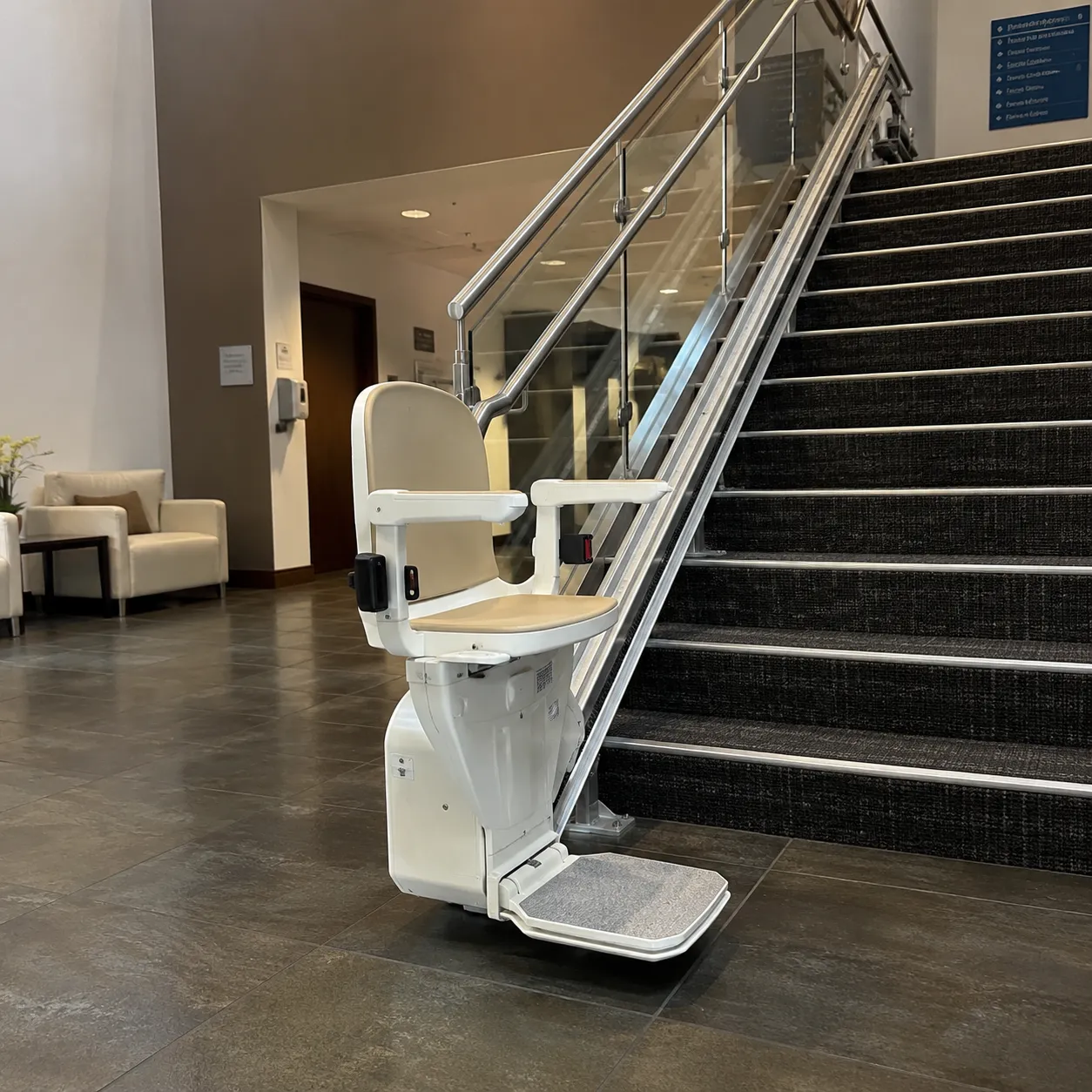
The K2 folds to 10¾ inches, among the narrowest available. On a staircase carrying an occupancy load, the clearance left when the lift is parked is what the fire marshal is interested in.
Parking position matters
A lift left at the bottom of the stairs sits in the path of everyone coming down. Curved installations can park out of the way at either end, and a flip-up rail section keeps the bottom landing clear on straight runs.
Whether it clears the route at all
On a narrow staircase in an older building, a stair lift may reduce the clear width below what is required. That has to be established before anything is ordered, not after.
We work this out at survey. It is the most common reason a commercial stair lift turns out not to be viable, and it is better to know at the start.
Code and Compliance
Stair lifts fall under ASME A18.1, the Safety Standard for Platform Lifts and Stairway Chairlifts, which Oregon adopts as part of the Oregon Elevator Specialty Code. That is a different standard from the elevator code, and the requirements differ.
Equipment Requirements
Commercial installations have requirements residential ones do not, including how the lift is operated, how it is protected and what happens at the landings. Some configurations permitted at home are not permitted in a public building.
And the equipment falls within Oregon's elevator licensing framework, meaning installation by a licensed contractor.
Accessibility Requirements
Accessibility is a separate question. ADA and building code determine whether your building needs an accessible route and what qualifies as one.
The equipment standard and the accessibility requirement are two different things, and satisfying one does not automatically satisfy the other. We confirm both before specifying.
What Matters in a Commercial Setting
Battery operation
Charging points on the rail, and the lift continues to run through a power failure. In a building where it forms part of the accessible route, that is not optional.
Keyed access
Access can be restricted by key, which matters where a lift is publicly accessible and unsupervised use is a concern.
Obstacle detection
Sensors on the carriage and footrest stop the lift if it meets an obstruction, in both directions.
Overspeed governor
Prevents the chair descending too fast, independently of the drive.
Swivel and lock seat
The user faces the landing before standing, which matters more with unfamiliar users than with a resident who uses it daily.
Durable finishes
Wipe-clean seats and, on curved installations, out-of-the-way parking to keep the staircase clear between uses.
Why Oregon Buildings Call Us
We tell you when it is not the answer
A stair lift is the cheapest solution and sometimes it is the wrong one. We would rather say that at survey than have you fit equipment that does not solve the problem.
We know which standard applies
A18.1 rather than the elevator code, and Oregon's adopted edition governs. Getting that wrong causes problems at inspection.
We service it afterwards
The team that installs it maintains it. We are an elevator company with technicians across the state, not a retailer who fits and leaves.
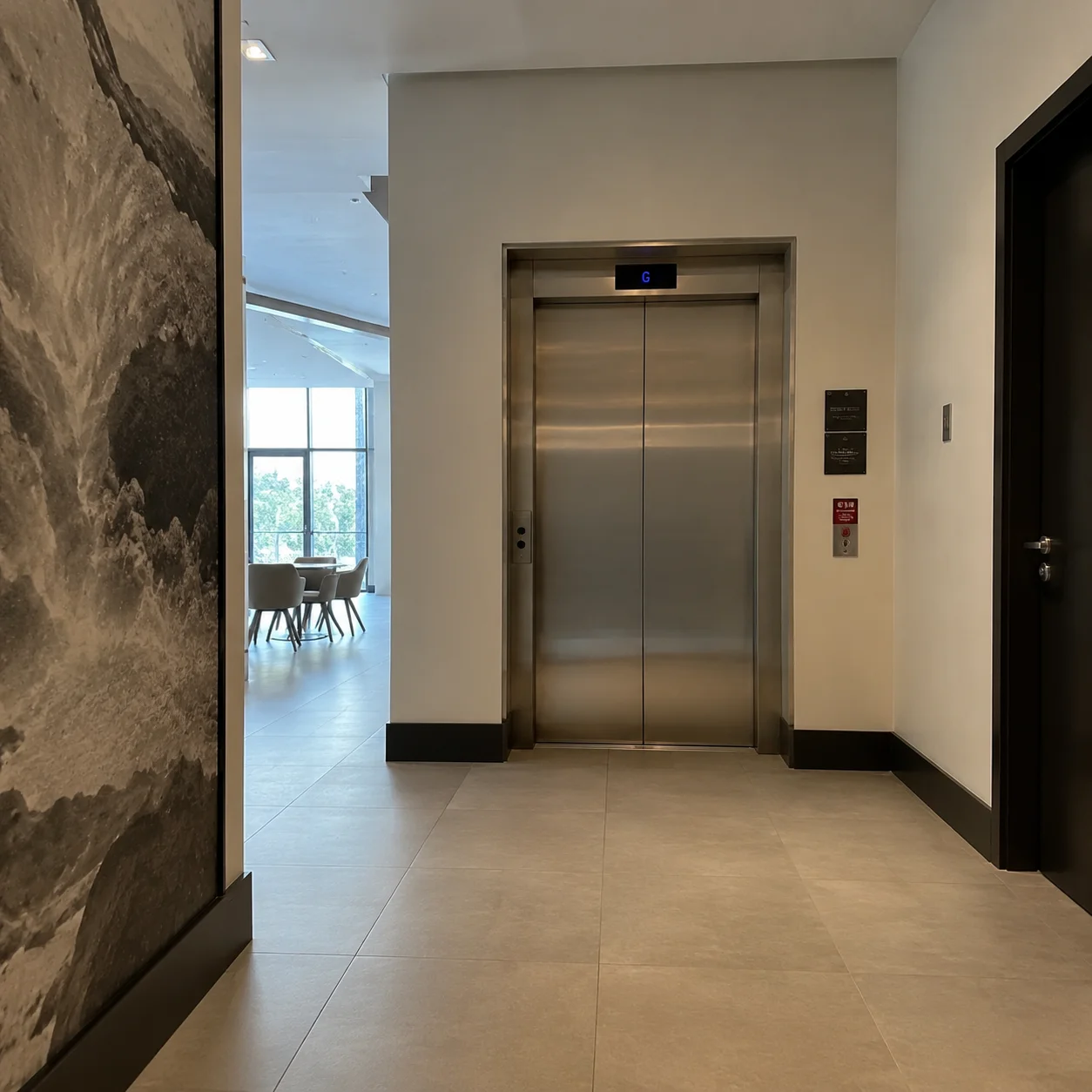
We fit the alternatives too
Platform lifts, LU/LA elevators and full elevators. The recommendation follows the building.
Commercial Stair Lifts Across Oregon





Commercial Stair Lift Questions
Yes, where code permits. Commercial installations carry requirements that residential ones do not, and stair lifts fall under ASME A18.1 rather than the elevator code. Whether a stair lift suits a particular building depends on the staircase, the traffic and the accessibility requirement.
Ready to talk accessibility lift solutions?
Send us a photo of the staircase and tell us what the building is used for. We will tell you whether a stair lift solves it, and what does if it does not. Four generations of Oregon elevators behind every answer.