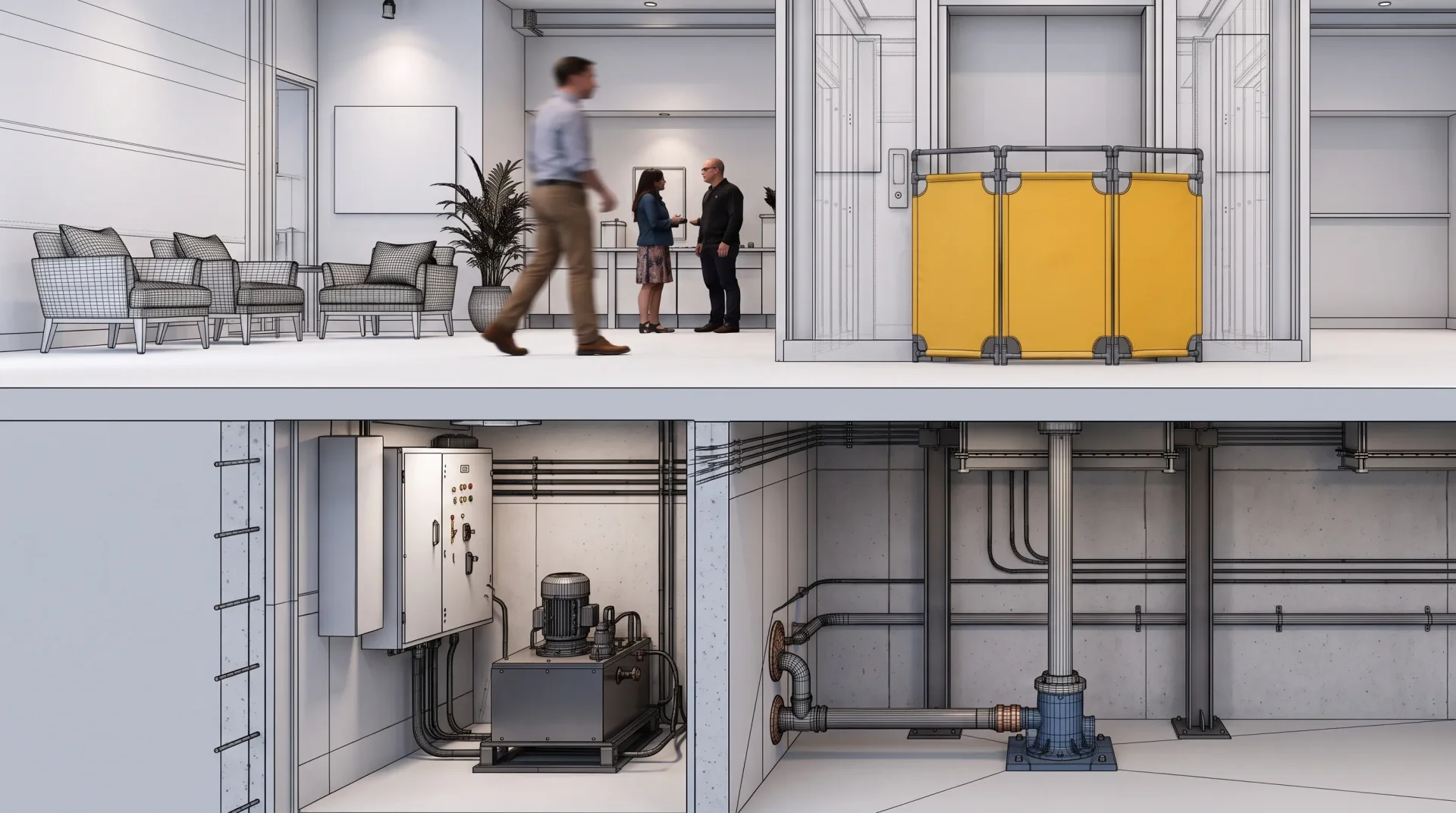
Hydraulic Elevator Rupture Valve Testing in Oregon
Red tagged, overdue, or been quoted for a test you are not sure you need? We look at the equipment first, tell you what actually applies, and test it if it does.
A red tag takes the elevator out of service until the problem is corrected. If your building has one elevator, that is not something that can wait.
Call us on 503-284-2003. We will tell you what the tag requires, whether the test genuinely applies to your equipment, and how quickly we can be there.
Sometimes the answer is straightforward: the valve is there, it needs testing, we test it. Sometimes it turns out the requirement does not apply to your elevator at all, and that is worth finding out before you pay for anything.
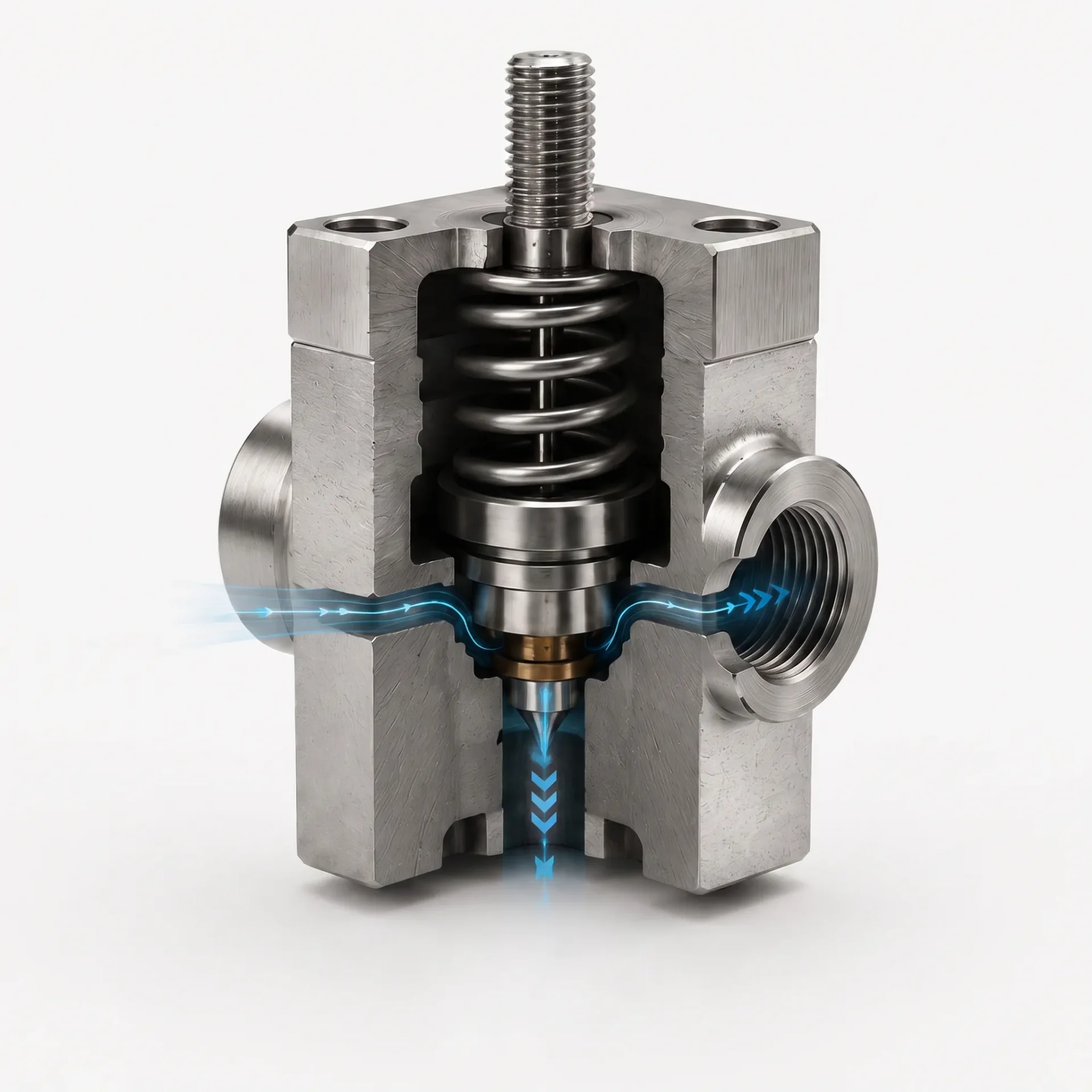
What Is a Rupture Valve?
On a hydraulic elevator, the car is pushed up by fluid under pressure. If a hydraulic line fails, that pressure disappears and the car can descend uncontrolled.
A rupture valve, sometimes called an overspeed valve, sits in the pit and closes automatically if the fluid starts moving faster than it should. It stops the car falling.
Like anything that only acts in an emergency, it can sit for years without being asked to do anything. Testing is how you find out it still works.
Get Your Valve TestedDoes My Elevator Even Have a Rupture Valve?
Most building owners do not know, and it is a fair question rather than a foolish one.
Older hydraulics often do not have one
Rupture valves came in with a code change in the mid-1990s, so a hydraulic elevator installed before roughly the late 1990s was often not built with one. Some had one fitted later. Many did not.
The valve sits in the elevator pit, which means the only reliable way to know is for an elevator mechanic or inspector to look. Four generations on Oregon hydraulics means we usually have a good idea what is likely fitted to what before we even open the pit.
Why this matters
On a hydraulic elevator, the five-year test requirement depends on what safety devices are fitted, and an overspeed valve is one of them.
If your elevator does not have one, and none of the other devices apply, that testing requirement may not apply to your elevator at all. That is worth confirming before you pay for a test.
How Often Does a Rupture Valve Need Testing?
Oregon requires a rupture valve test on hydraulic elevators every five years. It is the test owners most often lose track of, simply because it comes around so rarely.
Where it applies, the rupture valve test is run on the same five-year cycle as the full test, so it is not usually a separate appointment or a separate bill. On a cable elevator the five-year test is a full-load test instead, since there is no rupture valve to check.
The requirement depends on the equipment. A hydraulic elevator fitted with a governor, safeties, oil buffers, ropes, plunger grippers or an overspeed valve falls under five-year testing. A direct-acting hydraulic elevator with none of those may fall outside it, which is exactly the kind of thing worth checking before you pay.
More on required state testingWhy Buildings Call Us for This

We check before we quote
Someone has to go into the pit to see what is actually fitted. We look first and tell you what applies to your equipment, including when the answer is that it does not.

We will tell you a test is not needed
That answer has cost us work and it is still the right one. If your elevator falls outside the requirement, you should not be paying for the test.
No contract to book a single test
You do not need an ongoing agreement with us. Book the test you need, and if you would rather we tracked your dates from then on, that is available and cancellable at any time.

One elevator matters here
A building with a single hydraulic elevator and a red tag has no fallback. We are a small enough shop that your one elevator does not sit behind a portfolio.
We know old hydraulic equipment
Four generations in Oregon means we have worked on hydraulics installed long before rupture valves were required, and we know what is likely to be fitted to what.
How Quickly Can You Test?
For a red-tagged elevator we prioritise getting out to look, because until someone has seen the equipment nobody can tell you what clearing the tag involves.
We come and look
We confirm what is fitted, what the tag requires, and what the test involves on your equipment.
We give you the answer
If a test is required, we tell you how soon we can run it. If one is not required, we tell you that instead.
We carry out the test
The five-year test takes a few hours. We carry it out, handle the paperwork, and clear the tag.
Rupture Valve Testing Across Oregon
A red tag outside the metro still gets a technician. We cover all six regions.
Not sure if we reach you? Call us. We cover the whole state.






Rupture Valve Testing Questions, Answered
A rupture valve, also called an overspeed valve, is a safety device on a hydraulic elevator that closes automatically if hydraulic fluid starts moving faster than normal. It prevents the car descending uncontrolled if a hydraulic line fails. The valve is located in the elevator pit.
Ready to Talk Elevators?
Tell us what elevator you have and what you have been told. We will confirm what actually applies to your equipment and what it takes to clear it. Four generations of Oregon elevators behind every answer.